Rumors don't live in one channel — and listening tools that only watch one miss what matters most. This issue shows how DCE is connecting digital signals with community-level voices in real time: a new uInfluence survey, plus field stories from Tanzania, Pakistan and Afghanistan. READ THE LATEST DCE ISSUE →
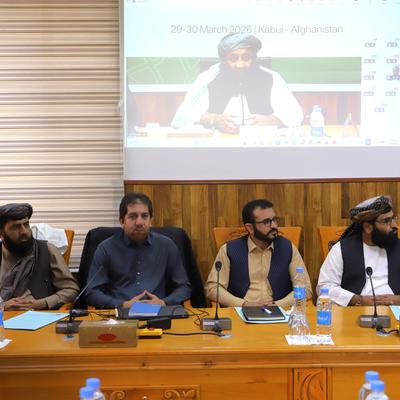
In late March, UNICEF Afghanistan, together with the Communications Working Group (CWG) under the National Emergency Operations Center (NEOC), brought colleagues working on polio eradication together in Kabul for a two-day training on Digital Community Engagement (DCE) and misinformation management. Participants included representatives of the regional and provincial Emergency Operations Centers (EOC), UNICEF and WHO teams, and frontline communication and social mobilization staff.
LAHORE – Young Areeba Sajid is already carrying Pakistan’s flag on a global platform as a representative of the World Association of Girl Guides and Girl Scouts (WAGGGS). Confident, articulate and deeply committed to community service, she embodies the true spirit of a Girl Guide. But her journey to becoming a polio advocate began with doubt, confusion—and a powerful change of heart. Like many young people, Areeba spends time on social media. It was there that she first encountered a piece of fake news claiming that the polio vaccine was unsafe.
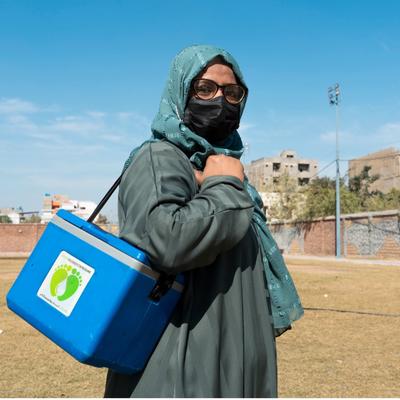
Across Pakistan, thousands of frontline health workers, many of them women, go door to door to ensure children receive lifesaving polio vaccines. Their work requires patience, persistence and, above all, the ability to build trust with families in the communities they serve. Each March, as the world marks International Women’s Day, we are reminded that recognising women’s contributions cannot be limited to a single day. The occasion invites us to reflect on the lifelong commitment required to advance rights, dignity and opportunity for women everywhere. In communities across Pakistan, that
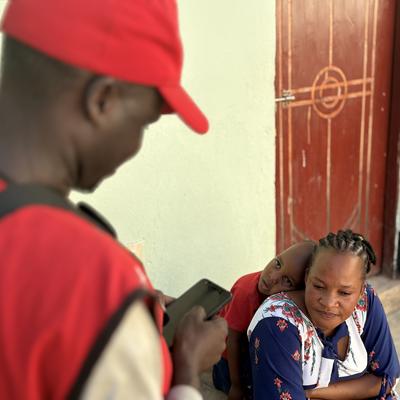
Tanzania is often considered a stronghold of immunization success. Vaccination coverage is consistently high. Trust in institutions remains strong. Community health workers are known, respected, and present in people’s daily lives. Campaigns are familiar, and acceptance is the norm. And yet, when the country launched its latest polio campaign, something did not fully align. By Emanuele Cidonelli, UNICEF Digital Community Engagement Specialist Mwanza, Tanzania — March 2026
In 2025, UNICEF’s Digital Community Engagement (DCE) team supported vaccination efforts worldwide through highly targeted and localized digital campaigns, reaching 175.8 million people and generating 3–5 times higher engagement than traditional approaches. These results are the outcome of years of research and practice consolidated into a robust infrastructure, where social listening and behavioural evidence are combined with analytical models to ensure that critical, life-saving information reaches the people who need it most—and is accessible and understandable to them. Through this work, we
In the Boucle du Mouhoun region, community health workers reached isolated and displaced families by bicycle, traveling 10–15 km per day with vaccines carried in UNICEF-supported cold boxes. During the November 2025 campaign, one team alone vaccinated 1,499 children, helping the area reach 95% coverage despite insecurity and access constraints. By combining persistence, local trust, and community dialogue, frontline workers turned logistical barriers into a successful, community-driven response to protect children from polio.
During the November 2025 polio vaccination days in Zabré, health teams introduced night-time vaccination visits (8–10 pm) to reach children missed during the day while parents worked in the fields. Over three evenings in Kenoko and Bourma, teams vaccinated 97 children who had previously been unreached, significantly improving coverage. The initiative was welcomed by communities as a practical, respectful adaptation to local realities and demonstrated how flexible delivery approaches can close immunity gaps in rural, agriculture-dependent settings. Read more: Night-time vaccination to reach