

Building Health One Household at a Time
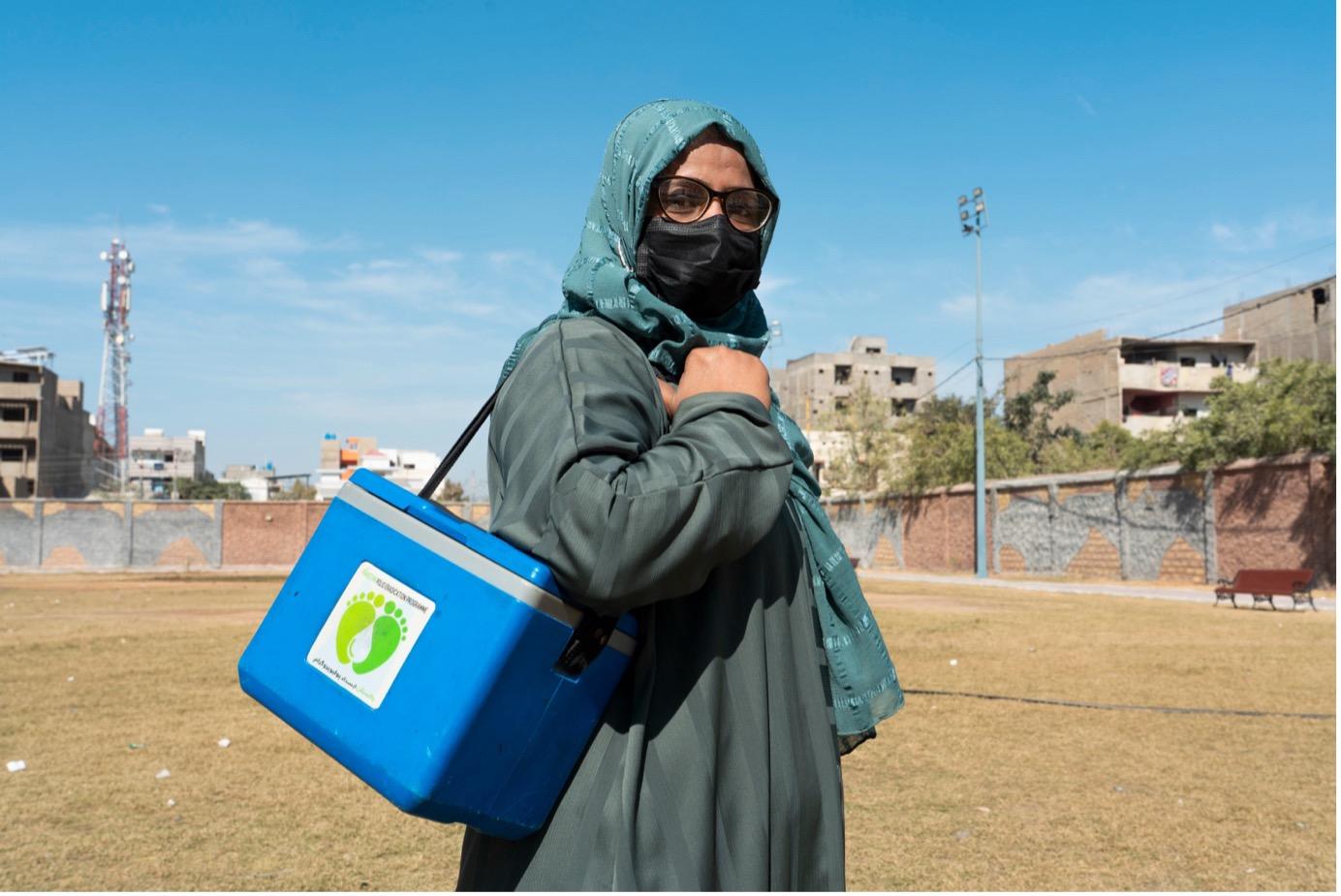
Across Pakistan, thousands of frontline health workers, many of them women, go door to door to ensure children receive lifesaving polio vaccines. Their work requires patience, persistence and, above all, the ability to build trust with families in the communities they serve.
Each March, as the world marks International Women’s Day, we are reminded that recognising women’s contributions cannot be limited to a single day. The occasion invites us to reflect on the lifelong commitment required to advance rights, dignity and opportunity for women everywhere.
In communities across Pakistan, that commitment is visible in the women who carry the right to health from door to door. Their work demonstrates a core principle of social and behavioural change. Lasting change begins with trust, respect and human connection. Erum, an Area In-Charge in the polio programme, is one of these women.
Erum never finished school and she did not pass her matric exams. When she joined the Pakistan polio programme in Gulzar e Hijri, District East, Karachi, Sindh, she did not see herself as an advocate or a changemaker. She was simply a mother trying to support her family.
Her own child was born deaf and unable to speak. She understood what it meant to live with uncertainty, to navigate a world that was not always designed for your child, and to advocate for care when others quietly lowered their expectations.
At first, the programme was simply work, but during awareness and training sessions, something began to change. Erum realised that education was not a privilege reserved for others. It was a tool. If she understood vaccines, immunity and prevention, she could help others understand. If she could explain the science in words that families trusted, she could help protect children before disability ever had a chance to take hold.
She began teaching herself new skills. She studied English so she could better understand technical materials, and she learned Bengali so she could speak directly with families in their own language. She practised late into the night. Over time, the woman who once doubted her own schooling became someone neighbours turned to for advice.
Building trust did not happen overnight. Doors sometimes closed before she could finish a sentence. Some families dismissed her concerns, while others worried that the vaccine might cause harm. Even so, Erum continued to return. She often walked long distances in the heat to visit households again and again.
When families refused vaccination, she did not always leave immediately. She stayed and listened. She helped with small household tasks, comforted crying babies and spoke with parents about their children’s health. Weeks sometimes turned into months. Gradually, refusals turned into conversations, and conversations turned into acceptance.
Her persistence was grounded in empathy. Erum had fought to secure a cochlear implant for her own child, and she understood how important it was to protect children from preventable health challenges whenever possible. Each conversation with a family reminded her why the work mattered.
Women like Erum are not only delivering vaccines. They are building the trust that makes vaccination possible. Their work reminds us that eradicating polio depends not only on vaccines, but also on listening to communities, respecting their concerns and valuing the women who return, again and again, to protect children.