

From Misinformation to Polio Champion
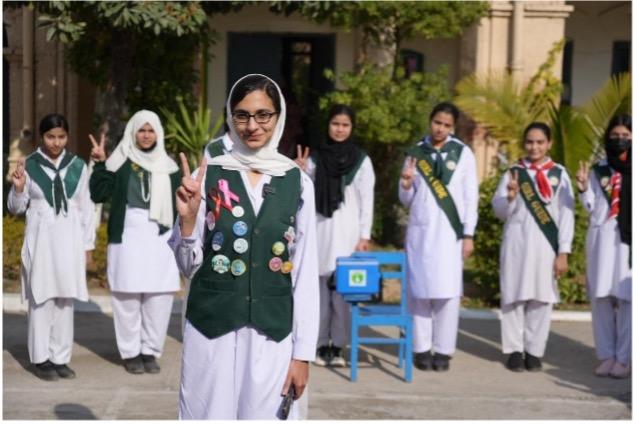
LAHORE – Young Areeba Sajid is already carrying Pakistan’s flag on a global platform as a representative of the World Association of Girl Guides and Girl Scouts (WAGGGS). Confident, articulate and deeply committed to community service, she embodies the true spirit of a Girl Guide. But her journey to becoming a polio advocate began with doubt, confusion—and a powerful change of heart.
Like many young people, Areeba spends time on social media. It was there that she first encountered a piece of fake news claiming that the polio vaccine was unsafe.
“I remember reading a post that looked convincing,” she recalls. “It had emotional language and false claims presented as facts. I accidentally started believing that the polio vaccine was not safe.”
The misinformation began to distort her perception. Gradually, she found herself questioning routine immunization. “I even started urging my friends, my parents and people in my community to stop vaccinating their children,” she admits. “I thought I was protecting them.”
What Areeba didn’t realize at the time was that she had become a victim of the very misinformation she now fights against.
Her transformation began when a local community mobilizer noticed her concerns and gently intervened. Instead of dismissing her fears, the mobilizer referred her to a qualified doctor and encouraged her to consult credible sources, including Pakistan’s official polio information platform, EndPolio.com.pk.
Areeba visited a trusted doctor in her neighbourhood and openly discussed her doubts. She also carefully reviewed information available on the official website. The experience was eye-opening.
“I realized how misinformation had completely distorted my thinking,” she says. “The doctor explained how the vaccine works, how it is tested, and why it is essential. The website provided reliable, evidence-based information. That changed my view altogether.”
What began as uncertainty turned into conviction.
Today, Areeba speaks passionately about polio eradication. For her, it is not just a health campaign - it is a moral responsibility.
“Polio eradication means no child ever has to suffer paralysis from this disease,” she says firmly. “If we do not stop polio here, it can resurface and paralyze children at a scale not seen before, wasting the entire effort the world has put in to eradicate it.”
She dreams of seeing Pakistan free of polio and is determined to take the message to every corner of the country. “I will take up the cause of polio eradication in schools, colleges and universities across Pakistan,” she says. “Young people must become ambassadors of truth.”
As a representative linked to the global Girl Guides movement, Areeba also recognizes the importance of international solidarity. She has pledged to advocate within international forums for sustained global support to Pakistan’s polio eradication efforts until the virus is completely eliminated.

Rawalpindi: Areeba talks to young Girls Guides volunteers during a peer discussion held in a school. Photo by Shahzad Mahmood.
“We need the international community to continue its assistance until polio is eradicated everywhere,” she emphasizes. “Diseases do not respect borders.”
Beyond advocacy, Areeba has offered to volunteer alongside polio workers, even in challenging and high-risk areas. She deeply respects frontline health workers who go door-to-door to vaccinate children.
“They are protecting our future,” she says. “The least we can do is support them.”
As a Girl Guide volunteer, she is now conducting peer sessions, raising awareness among fellow students, and recruiting more volunteers to strengthen community engagement for polio eradication.
Areeba’s message is clear and heartfelt: “To parents, I say: fight misinformation instead of lending ears to it. Verify information from trusted doctors and official sources before making decisions about your children’s health.”
To her peers, she offers a practical call to action: “Report misinformation when you see it. Double-check before sharing anything. Don’t let false news harm real lives.”
Areeba Sajid’s story is not just about polio—it is about the power of critical thinking, responsible citizenship, and youth leadership. From being misled by a viral post to becoming a vocal advocate for science and child protection, her journey reflects the resilience of a generation determined to choose facts over fear.
In her own words: “I once believed misinformation. Now, I want to be part of the solution. I want a Pakistan where no child ever suffers from polio.”
And with young leaders like Areeba stepping forward, that vision feels closer than ever.
Thanks to decades of global efforts, polio has been eliminated from most parts of the world. However, as long as the virus exists anywhere, children everywhere remain at risk. If eradication efforts slow down, the virus can resurface and paralyze children at a scale not seen before, reversing years of progress and wasting the immense global investment made to end it.
Polio eradication means ensuring that no child, anywhere, ever suffers from polio again.
By Wasif Mahmood