
2.79 MB
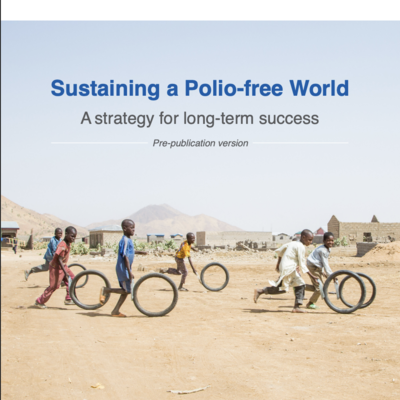
This 2025 document is the full draft strategy (version 4.0) of "Sustaining a Polio-free World," the revision of the Polio Post-Certification Strategy (PCS) originally published in 2018. This 86-page WHO-led document defines the essential functions, governance arrangements, and resource requirements needed to maintain a permanently polio-free world after wild poliovirus and circulating vaccine-derived poliovirus are eliminated and global eradication is certified.
The strategy is organized around two post-certification goals. Goal One — protecting populations — addresses ongoing risks of poliovirus re-introduction after certification: continued immunization of birth cohorts through routine vaccination and national schedules, maintenance of global OPV stockpiles for emergency response, poliovirus containment of all remaining wild and potentially infectious materials under GAP-IV, and development of antiviral therapeutics. Goal Two — preserving gains and readiness — addresses surveillance, laboratory, and health system functions that must continue to enable rapid detection and response to any future poliovirus detection: environmental surveillance in high-risk settings, AFP surveillance, the Global Polio Laboratory Network, and regulatory and containment oversight.
A critical dimension is the transition analysis: how GPEI-funded operations shift to nationally-funded and globally-coordinated systems. The document presents a model requiring countries to absorb essential functions into national budgets, supported by a reduced global coordination function within WHO. It also addresses OPV cessation post-certification — staged withdrawal of OPV from routine immunization and transition to IPV-only schedules — and antiviral drug development as a medium-term R&D priority.
The foundational text for all post-eradication planning globally.
Document value: Defines the entire post-certification strategy for maintaining a polio-free world permanently. Foundational document for transition planning, OPV cessation, containment, and post-eradication surveillance frameworks globally.
See also: