

9.32 MB
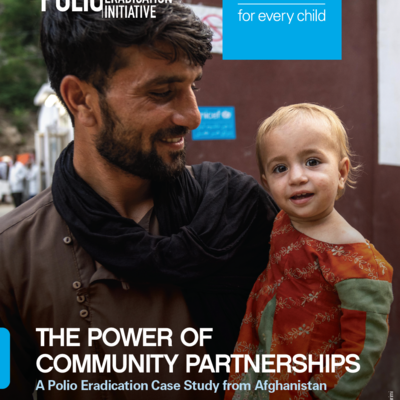
This UNICEF case study documents how polio teams in southern Afghanistan sustained and expanded vaccination coverage after a major operational setback: the late-2024 suspension of house-to-house vaccination, compounded by a ban on women working as frontline workers, weak population data, and community mistrust. With Afghanistan one of only two countries where wild poliovirus (WPV1) remains endemic — and 21 WPV1 cases recorded in 2025 — the study captures a real-world test of how programmes adapt when traditional door-to-door methods are no longer available.
At its core is the "push-pull strategy" developed by UNICEF, WHO, and the GPEI, paired with a new "cluster approach." WHO-led "push" efforts fixed operational problems — microplanning, team performance, logistics — while UNICEF-led "pull" efforts built community acceptance and demand through local leaders. The cluster approach broke large catchment areas into 1,154 smaller, manageable clusters and shifted outreach away from generic mobilization toward locally trusted intermediaries: community enablers, Grandmother Groups, youth leaders, elders, and religious leaders engaged through the faith-based TAAVON initiative. Tailored, data-driven interventions allowed real-time course correction cluster by cluster.
The results are concrete and well-evidenced. Post-campaign coverage in high-risk southern districts rose from 81% in January 2025 to 95% by February 2026, and the number of missed children fell from 7,014 to 3,414 over the same period. The study quantifies the human infrastructure behind this — 8,382 enablers trained, 379,805 caregivers reached, 192 Grandmother Groups conducting over 12,000 dialogues — and shows how the same platform delivered integrated WASH and nutrition services. It closes with candid lessons learned and forward-looking recommendations across the push, pull, and combined dimensions.
Document value: A practical, results-backed account of how localized, trust-based community partnerships and a data-driven cluster approach overcame access restrictions to drive measurable coverage gains — a transferable model for reaching zero-dose and missed children in conflict-affected, hard-to-reach settings.